 830-992-9526

Care for Wild
The largest rhino orphanage in the world. From the worst night of an animal’s life to the day it walks free — rescue, years of rehabilitation, and release onto protected land.
Sip wine. Save rhinos. This is where the second half happens.
In 2016 our founders stood in South Africa in the aftermath of a rhino poaching. The answer to what two people in the Texas Hill Country could do about it turned out to be a vineyard, a rhino named Blake, and a community that keeps showing up for rhino conservation. At the end of 2025 that work became the Rhinory Foundation — a 501(c)(3) whose only job is to move money to the frontlines quickly and cleanly.
The need has not shrunk. Every year the sanctuaries take in more orphans, the patrols cover more ground, and the bills arrive again in January. What we raise this year funds this year.
We don’t do this work. We fund the people who do.
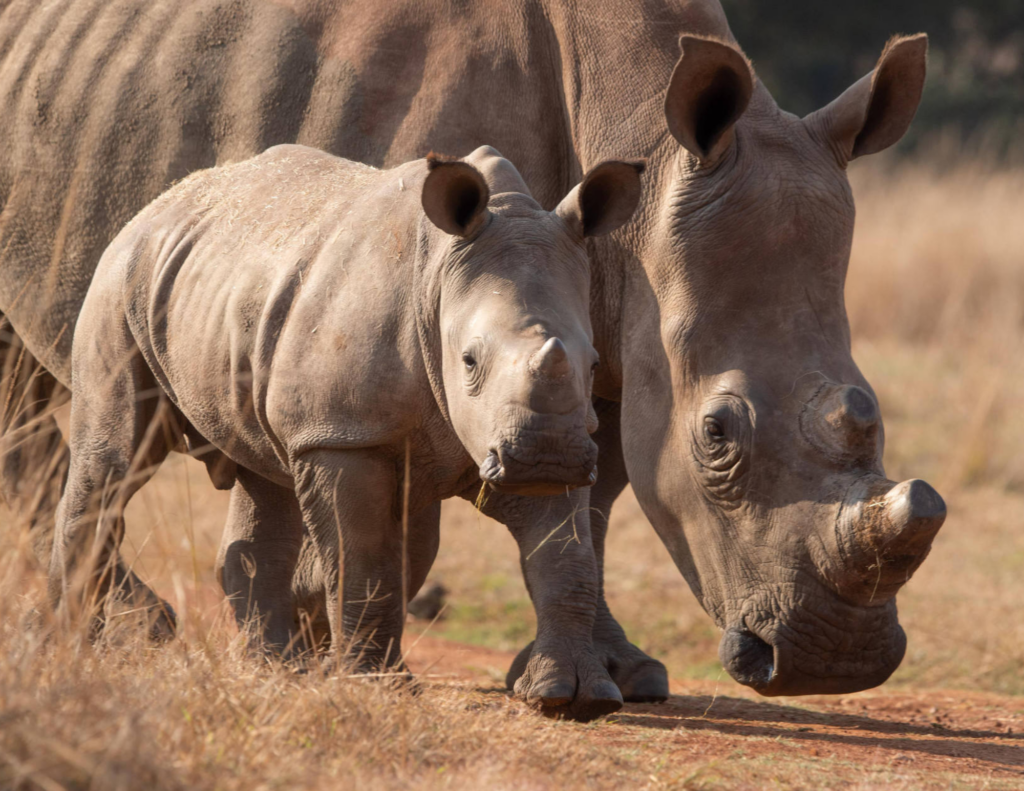
Care for Wild is where the poaching crisis has a face. His name is Hercules — a calf alive today because a room in Fredericksburg chose to step forward last October. The sanctuary takes an orphan in, raises it for years, and returns it to protected wild land. The Foundation funds the milk formula, the veterinary care, and the years in between. It is the most direct line from a bottle of Texas wine to a living rhino that we have.
A Rhinory Foundation conservation partner
The full arc, from rescue to release.
Care for Wild sits in Mpumalanga, South Africa, on the edge of the country’s poaching frontline. It is the largest rhino orphanage in the world.
The work begins with a phone call — a calf found beside a poached mother — and continues for years. Round-the-clock intensive care in the first weeks. Bottle feeding, then weaning, then the slow introduction to other orphans and to open ground. Security teams guarding the sanctuary throughout, because a rhino calf is a target from the day it arrives.
It ends, when it goes right, with release: a rhino that arrived as an orphan walking out onto protected wild land as an adult. The Foundation funds the middle of that story, which is the longest and least glamorous part. In 2025 that meant milk formula, veterinary care and rehabilitation for calves like Hercules.
Guests can see the work first-hand from the solar-powered Rhino View Lodge inside the sanctuary — one of this year’s gala lots.
Exactly what your gift does.
We never ask you to help save the rhino in the abstract. Gifts to Care for Wild go directly to the work on the ground:
- Round-the-clock care for orphaned rhino calves
- Rehabilitation through to release on protected land
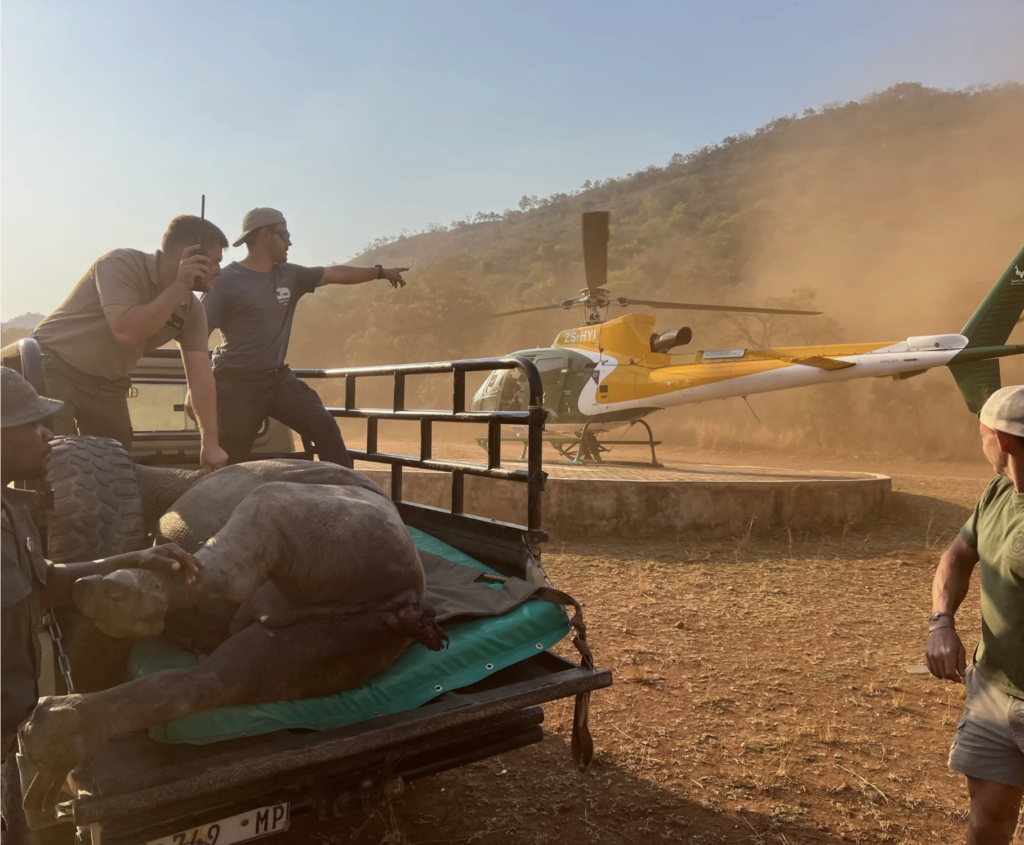
- Dehorning operations that make a rhino worthless to a poacher
- The security teams that guard the orphanage
Where 2025 went: Orphan rescue and rehabilitation — milk formula, veterinary care and rehabilitation for calves like Hercules.
Care for Wild at the 2026 gala.
On October 17 the Foundation raises a year of funding in one night, and a share of it travels straight back to Mpumalanga. Join us at the table, or support the work from wherever you are.
$155
Make a high-impact contribution
Not every need fits a line item. This gift goes where Care for Wild needs it most on any given day, across rescue, rehabilitation, rewilding and protection.
$555
Support and protect a rewilded rhino
Release is not the end of the story. Monitoring and protection for one rhino back in the wild, so years of rehabilitation become a life lived there.
$675
Fund a ranger
Care for Wild’s anti-poaching rangers guard the world’s largest orphaned-rhino sanctuary around the clock. One ranger, standing between these rhinos and the people who would harm them.
$800
Fund care for a weaned calf in rehabilitation
Off the bottle is not the same as ready for the wild. Food, veterinary care and daily attention for one weaned orphan still learning to be a rhino.
$800
Fund a Mounted Unit rider and horse
Riders on horseback patrol the sanctuary’s boundary fences every day, covering ground vehicles cannot reach. One rider and one horse on the unit that keeps the perimeter secure.
$985
Fund a K9 handler and dog
The armed reaction team works with trained dogs that can follow a poacher’s scent long after the trail has gone cold to the eye. One handler and one dog on the team that answers first.
$1,170
Fund one month of care for a bottle-fed rhino calf
Sixteen to twenty-four litres of milk replacer a day, every two to three hours, around the clock — that is what an orphaned rhino calf takes to stay alive. One month of formula, supplements, bedding, and the carers doing the 3am feed.
$1,600
Fund a month for a rhino calf in the High Care Unit
Out of immediate danger is not the same as out of the woods. A month of continued milk feeds, wound management and constant supervision for a calf strong enough to leave ICU but not yet strong enough to be left alone.
$1,970
Fund ICU care for a rhino calf
Before a calf can be bottle-fed and raised, it has to be stabilised. Emergency fluids, treatment for injury and infection, and round-the-clock veterinary supervision through the most dangerous days of a rhino’s life.
Two ways in. Pick the one that fits.
Sip
Drink the wine.
Every bottle from Rhinory supports the Foundation’s partners. Visit the tasting room, join the club, or have it shipped.
Show Up
Come to the gala.
One night a year, the whole community sits down together and decides what gets funded. October 17, 2026.
A calf. A carer. A few years. A wild rhino.
That is the whole model. It works because people fund the years in between.